banner

Electric forklift for sale

  • Lithium Battery Forklift Moisture Protection Upgrade for Cold Storage: Eliminating Condensation and Water Exposure Risks at the Source
    Lithium Battery Forklift Moisture Protection Upgrade for Cold Storage: Eliminating Condensation and Water Exposure Risks at the Source
    August 19, 2026
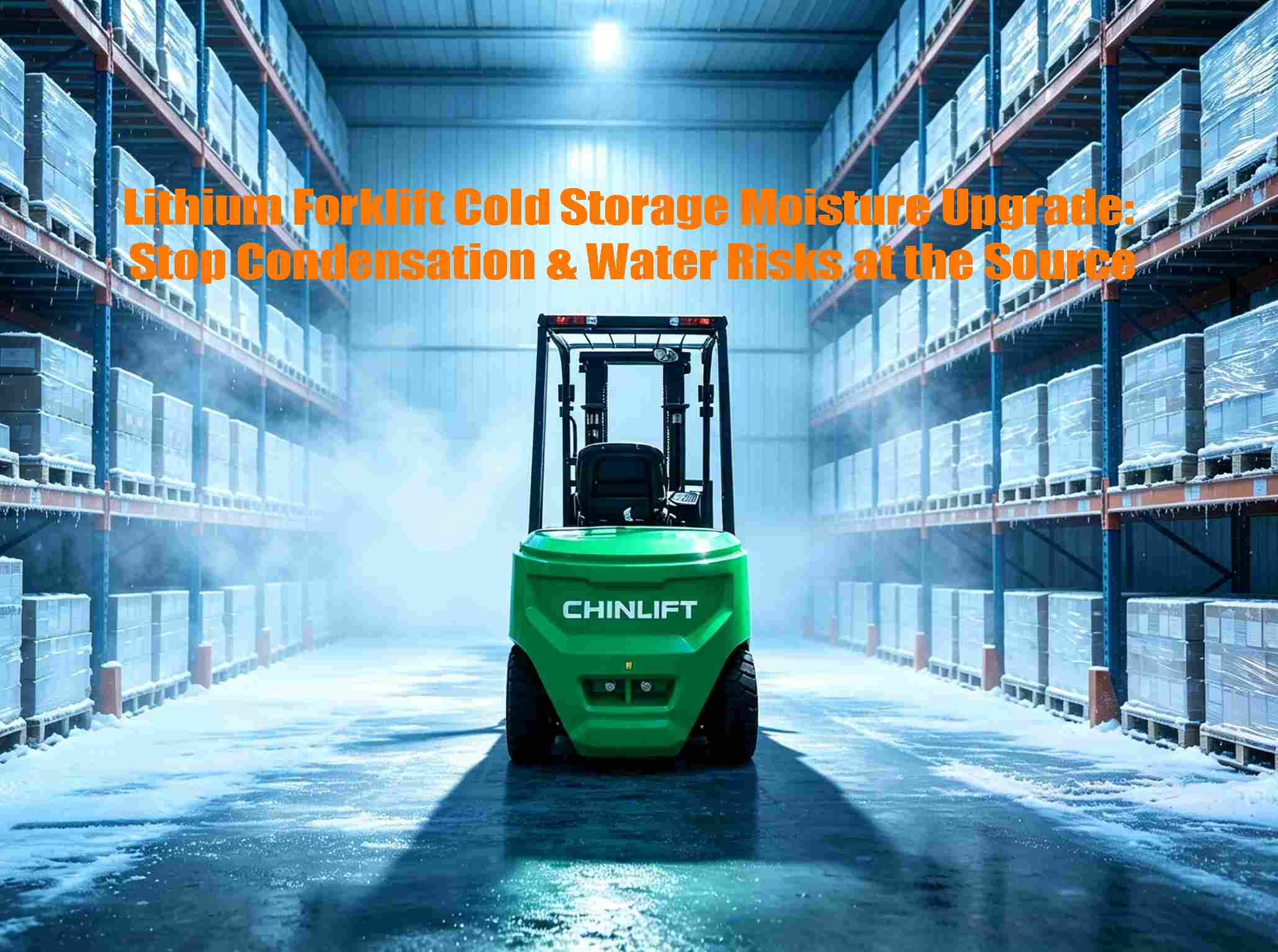
    In cold chain logistics, lithium battery forklifts frequently operate between ambient temperature environments and cold storage facilities with temperatures as low as -20°C or even lower. Condensation and water exposure are the two primary causes of electrical failures. Conventional forklifts often suffer from frequent issues such as circuit board short circuits, insulation failure, and metal corrosion under these extreme thermal conditions, resulting in significant downtime and operational losses. A systematic moisture protection solution is therefore essential—one that leading manufacturers like CHINLIFT have been actively integrating into their electric forklift product lines. Water Exposure and Condensation: Where Do Failures Originate? High humidity inside cold storage combined with large temperature differentials during loading and unloading leads to substantial condensation forming on both the exterior and interior surfaces of forklifts. This moisture can seep into motors, controllers, and wiring connectors, reducing insulation performance and potentially causing short circuits. Additionally, the mixture of ice and water on cold storage floors creates a "water-exposure" operating condition. If the vehicle's overall waterproof rating is insufficient (e.g., below IPX4), moisture can easily penetrate the electrical system, triggering serious malfunctions. For a typical 3 Ton Electric Forklift operating in such demanding environments, these risks are especially pronounced due to the high-power electrical components involved.  Comprehensive Electrical Moisture Protection Solution for Cold Storage 1. Source Selection: Dedicated Lithium Battery and High Protection Ratings   Prioritize dedicated cold-storage lithium battery forklifts whose core three-electric systems have undergone special treatment. Use fully enclosed battery packs and motors, along with corrosion-resistant insulating coatings, to effectively block moisture ingress. Ensure the entire vehicle achieves a minimum IPX4 waterproof rating, enabling it to withstand brief rain showers and temporary water immersion. Many modern electric forklift models from reputable brands now offer factory-installed cold storage packages that address these requirements from the ground up. 2. Sealing Details: Insulation and Anti-Corrosion Treatment   Apply waterproof insulating grease to all electrical components, connectors, and wiring harnesses, or install protective seals. Replace critical body bolts with stainless steel and apply anti-corrosion coatings to prevent condensation-induced rusting, which could lead to poor electrical grounding. These measures are particularly critical for a 3 Ton Electric Forklift, where high-current circuits demand impeccable insulation integrity. 3. Maintenance Protocols: Regular Insulation Testing and Drying   After daily operations, wipe down the electrical compartment with a dry cloth and use compressed air to blow out moisture. Implement a monthly insulation resistance testing routine to detect early signs of insulation degradation. Avoid charging directly within cold storage; instead, move the vehicle to a dry environment above 0°C to prevent lithium plating during low-temperature charging, which poses safety risks. True moisture protection for cold storage isn't merely about adding external safeguards—it requires a systematic design approach encompassing selection, sealing, thermal management, and maintenance. Only by proactively addressing electrical waterproofing can lithium battery forklifts—whether a compact 3 Ton Electric Forklift or larger models—achieve long-term stability and high efficiency in cold chain operations. As industry leaders like CHINLIFT continue to refine their electric forklift technologies, the gap between standard and cold storage-ready equipment continues to narrow, benefiting fleet operators worldwide. Frequently Asked Questions About Lithium‑Ion Forklifts Q1: Can a standard lithium battery forklift be used directly in cold storage? A: Not recommended. Standard forklifts lack moisture-proof treatments. The severe temperature fluctuations when moving in and out of cold storage cause internal condensation, which frequently leads to circuit board short circuits or insulation failure. You must choose a cold storage–specific model equipped with heating systems and waterproof insulating coatings on electrical components—features that manufacturers like CHINLIFT integrate into their dedicated cold chain series. Q2: What additional maintenance is required after moisture protection upgrades? A: Two critical tasks must be added: first, wipe down the electrical compartment and blow out moisture with compressed air after each shift; second, conduct monthly insulation resistance testing to monitor insulation health. These practices help catch potential issues early and prevent unexpected breakdowns. Q3: What are the risks of charging lithium batteries inside a cold storage facility? A: Charging below 0°C poses significant safety risks, including lithium plating that can puncture the battery separator and cause internal shorts or even fires. Always charge in a dry environment above 0°C, and ensure the battery is equipped with a low-temperature heating function that raises the core temperature to a safe level before initiating the charge cycle.
  • -25℃ Cold Storage Forklift Extreme Cold Survival Guide: Comprehensive Analysis of Five Core Protective Systems
    -25℃ Cold Storage Forklift Extreme Cold Survival Guide: Comprehensive Analysis of Five Core Protective Systems
    July 14, 2026
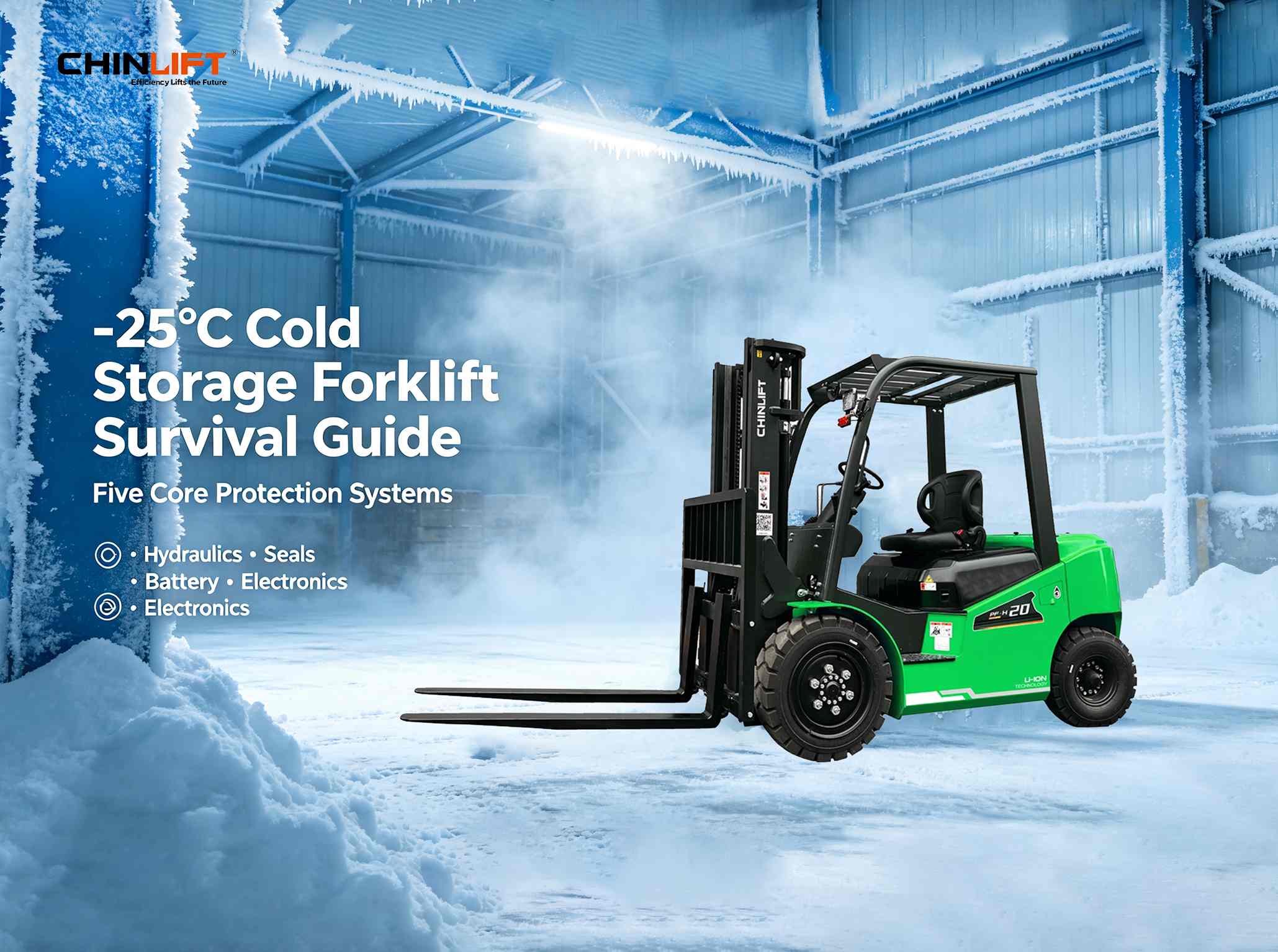
    When cold chain storage enters a deep cold environment of -25℃ or lower, ordinary forklifts not only face the problem of rapid battery depletion, but also encounter multiple challenges such as hydraulic "freezing", sealing cracking, and electrical short circuits. To ensure the equipment's availability in extremely cold conditions, a systematic "anti-freezing" modification of the forklift is necessary. Whether you are operating a 3 Ton Electric Forklift or other load capacities, the fundamental protective principles remain consistent. This article will analyze the complete protection plan for -25℃ cold storage forklifts in four dimensions: hydraulic, sealing, battery, and electrical moisture prevention. Hydraulic System: Fending Off Low Temperature Stagnation In extremely cold environments, a significant increase in hydraulic oil viscosity is the main cause of system failure. It is necessary to select hydraulic oil with specific low-temperature properties, such as Mobil's HVI 26 or Shell's Aero shell 41, to ensure low-temperature fluidity. At the same time, it is recommended to equip hydraulic cylinders with ventilation holes, and the surface of the piston rod should undergo chromium alloy thickening treatment to enhance corrosion resistance. High-pressure hoses must be made of low-temperature resistant rubber material to prevent oil leakage or rupture due to low-temperature hardening. For any electric forklift operating in such harsh conditions, the hydraulic system's reliability directly impacts overall operational safety. Sealing Components and Structure: Preventing Cold Shrinkage Cracking The significant temperature differences caused by the frequent entry and exit of forklifts in and out of the cold storage will accelerate the aging and failure of ordinary seals. The sealing system should adopt a multi-layer composite structure: the base layer uses natural rubber to ensure cold resistance, and the outer layer is composed of polytetrafluoroethylene (PTFE) to provide excellent cold resistance and corrosion protection. For key components such as the lifting chain, ultra-low-temperature-specific materials must be installed to prevent the steel from losing its toughness at low temperatures and thus avoiding the risk of fracture. Leading manufacturers like CHINLIFT Forklift have developed specialized sealing solutions that significantly extend component service life in freezing environments. Battery: Activating Deep Cold Energy The actual capacity of ordinary lithium batteries may drop sharply to less than 80% of the nominal value in an environment of -20℃, and charging becomes difficult. This is particularly critical for a 3 Ton Electric Forklift, which relies entirely on battery power for extended shifts. The solutions can be divided into two steps: First, select a lithium battery pack specifically designed for cold storage with a heating function, and preheat it to the ideal working temperature before operation; second, enhance the sealing and insulation processes of the battery pack, and some leading products can now achieve stable discharge in an ultra-low temperature environment of -55℃. When choosing an electric forklift for cold chain applications, battery thermal management should be a top priority. Electrical Moisture Protection: Overcoming Condensation Water From the -25℃ cold storage to the normal temperature area, the instantaneous formation of condensation (condensate water) on the equipment surface is the "number one killer" of the electrical system. The protection level of the vehicle controller and key electrical components must be raised to **IP67 or above**, and sealing treatment with sealant should be carried out. In addition, all wiring harness connectors need to be lubricated with special waterproof grease, and the display screen should be equipped with an electric heating defogging function to ensure that it will not crash due to short circuit when the humidity changes dramatically. CHINLIFT Forklift has integrated these moisture-proof technologies into their cold storage product lines, ensuring reliable performance in the most demanding environments. Conclusion The protection of the forklift in a -25℃ cold storage is a comprehensive project. Only by integrating low-temperature-resistant oil products, special sealing materials, lithium batteries with preheating function, and high-level electrical moisture-proof design, can the forklift operate stably in the harsh conditions of alternating extreme cold and high humidity. Whether you are evaluating a 3 Ton Electric Forklift or other models, ensuring that your electric forklift comes from a reputable manufacturer like CHINLIFT Forklift with proven cold-storage expertise will provide reliable guarantee for your cold chain logistics operations.

leave a message

leave a message
If you are interested in our products and want to know more details,please leave a message here,we will reply you as soon as we can.
submit

home

products

WhatsApp

Contact

Leave A Message
If you are interested in our products and want to know more details,please leave a message here,we will reply you as soon as we can.
submit