banner

electric forklift

  • How to Import Forklifts from China: A Complete Buyer's Guide
    How to Import Forklifts from China: A Complete Buyer's Guide
    October 30, 2026
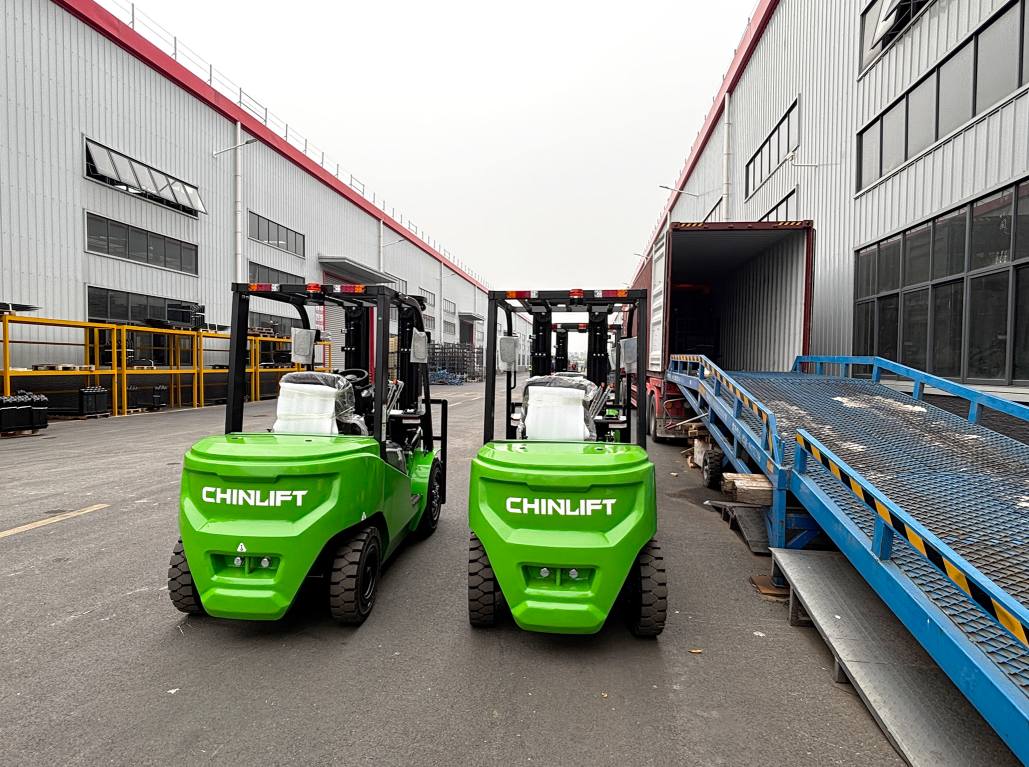
    Chinese forklifts have become the preferred choice for global buyers due to their cost-effectiveness, mature lithium battery technology, and stable delivery. However, cross-border purchasing involves compliance, certification, logistics, and after-sales services, and any minor mistake can easily result in detention fees, customs clearance failures. This article provides an actionable procurement process for overseas buyers. The first step is to identify requirements and compliance qualifications. First, clearly define the type of forklift: counterbalanced, reach, reach-lift, or off-road. Determine the load capacity, lifting height, and power type (lithium battery / diesel). For example, a 3 Ton Diesel Counterbalance Forklift is a common choice for heavy-duty outdoor applications, while an electric forklift is better suited for indoor warehousing and cold-chain operations. Compliance is of utmost importance. Different markets have different mandatory certifications: CE is required in the EU, local special equipment standards in Australia, and EPA emission requirements in North America. Lithium battery forklifts additionally require UN38.3 and MSDS battery documents. Lack of certification will result in direct seizure of the goods. Before purchasing, make sure the certificate model matches the order and reject the general "universal CE". The second step is to select suppliers and conduct business negotiations. Prioritize brands with their own factories and stable export experience, such as CHINLIFT, which offers a full range of counterbalance, reach, and electric models with mature export documentation. You can conduct on-site inspections or video audits through trade fairs or B2B platforms. Include the configuration list, warranty period, and spare parts list in the contract. The recommended trade terms are FOB and CIF, clearly defining the boundaries of ownership, freight, and risks. The third step is to prepare documents and arrange for shipment. Basic documents: commercial invoice, packing list, bill of lading, and certificate of origin. The HS code for forklifts is mostly 842710. Confirm the tax rate and declaration requirements with the customs clearance agency at the destination port in advance. The mode of transportation should be selected based on size: container, frame box, or roll-on/roll-off ship. The container must be well fixed and reinforced to prevent transportation collisions. Lithium battery forklifts are dangerous goods, and the freight forwarder must have the qualification for dangerous goods declaration. The battery voltage should be controlled within 30%. The fourth step is customs clearance at the destination port, receiving the goods, and after-sales service. Before the goods arrive at the port, send all the materials in advance to the local customs clearance agency for pre-approval. After customs clearance is completed, arrange for unloading and on-site inspection. Verify that the appearance, nameplate, and accessories are consistent with the contract. At the same time, arrange for after-sales service in advance: spare parts inventory, maintenance manual, and remote technical support. Many buyers fall into traps by only focusing on low prices and ignoring the supply of maintenance parts. In conclusion: The core of importing forklifts is not price comparison, but compliance first, single document closure, and locking after-sales. Write the certification, configuration, and delivery terms into the contract, and pair it with a reliable freight forwarder and customs clearance agency to complete the purchase stably and at a low cost. Frequently Asked Questions About Forklift Imports Q1: What certifications are required? A: EU: CE; Australia: local special equipment standards; North America: EPA. Lithium forklifts need UN38.3 + MSDS. Certificates must match the model. Q2: Are lithium forklifts dangerous goods? A: Yes. Use a DG-qualified forwarder; battery SOC ≤30%. Q3: What to inspect on arrival? A: Appearance, nameplate, accessories. Confirm spare parts & technical support in advance.

  • What Certifications Should Be Checked When Purchasing a Forklift?
    What Certifications Should Be Checked When Purchasing a Forklift?
    October 16, 2026
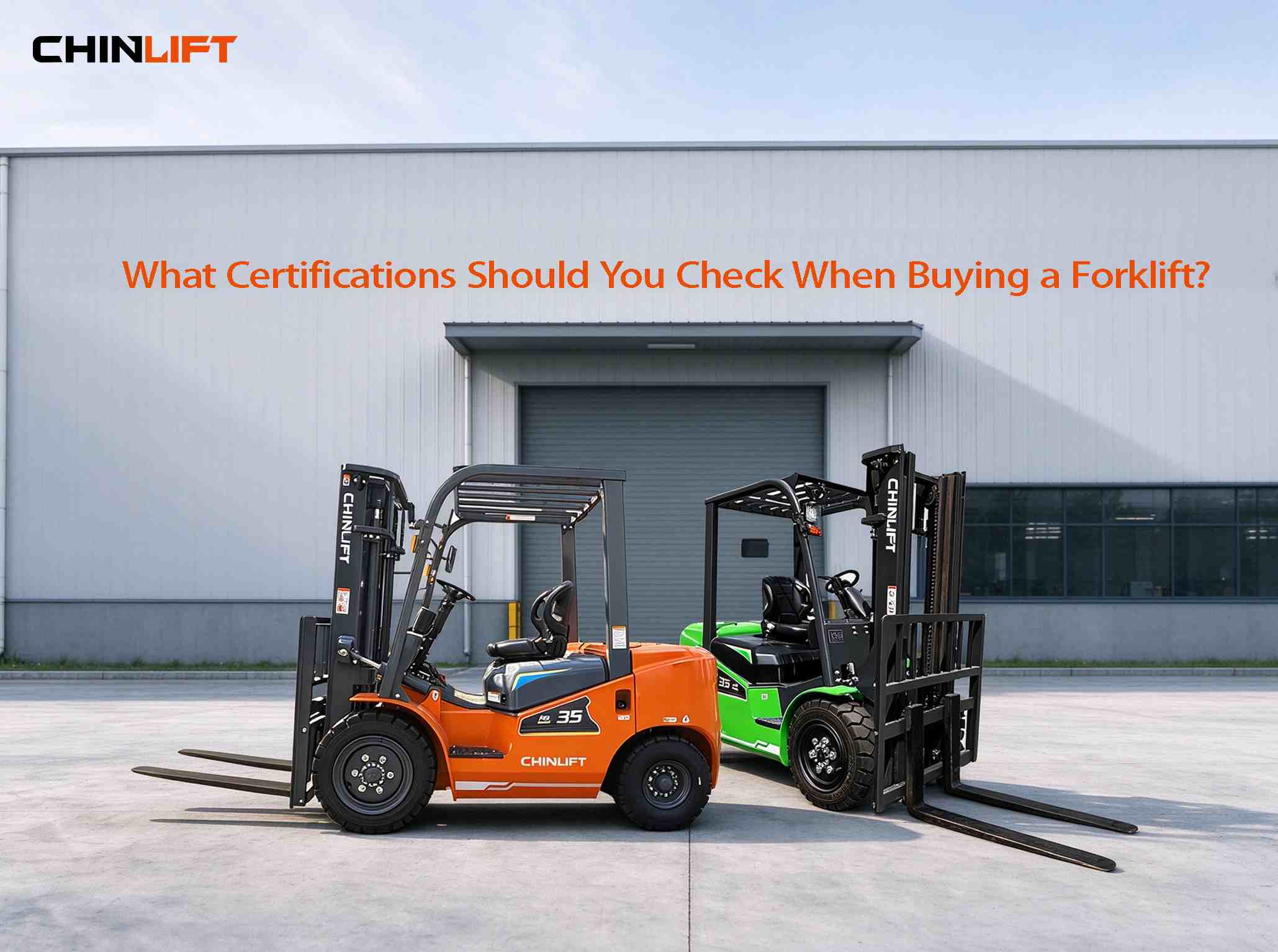
    Many businesses focus only on load capacity, pricing, battery range and appearance when buying forklifts, while neglecting to verify forklift certifications. As special industrial equipment, forklifts require complete compliance documentation. Valid certifications determine whether the unit can be legally registered, pass annual inspections and operate safely. They are also critical for factory compliance and overseas export shipments. To mitigate procurement risks and source compliant industrial forklifts, buyers must review the following core certificates and documents during procurement. First, basic manufacturing certifications form the baseline of forklift compliance. Reputable forklift manufacturers must hold a special equipment production license, demonstrating their capability to professionally manufacture, assemble and test forklifts. Every brand-new forklift should come with a full machine certificate and type test report, manufactured and inspected in line with industrial vehicle safety standards. These documents verify that the forklift’s structure, performance and safety features meet regulatory requirements. Units missing these documents are non-compliant. When sourcing a 3 Ton Diesel Counterbalance Forklift or electric forklift from CHINLIFT, always confirm the supplier can supply these essential documents for your selected model. Second, operational compliance documents decide if the forklift can be legally put into service. Every compliant forklift carries a unique special equipment identification code. You may cross-check this code against certificate records to avoid refurbished, altered or counterfeit units. For second-hand forklift purchases, verify the valid special equipment registration certificate. Incomplete paperwork prevents registration transfer and annual inspections, bringing substantial operational risks. Specialized certifications are required for harsh working environments and export projects. Explosion-proof forklifts deployed in chemical, dusty or flammable sites need official explosion-proof certification to reduce safety threats. For export forklifts, key credentials include CE certification and OSHA safety standards to satisfy overseas market access rules. For new-energy electric forklifts, environmental and energy consumption test certificates are recommended to confirm eco-friendly operation. In conclusion, certifications serve as the core guarantee for forklift quality and compliance. Comprehensive checks of manufacturing licenses, machine test certificates and industry-specific accreditations help prevent safety incidents and simplify regulatory audits for both domestic and global operations — a vital step for cost-effective forklift procurement. No matter if you select a 3 Ton Diesel Counterbalance Forklift, electric forklift, or other models from CHINLIFT, full certification verification is the cornerstone of safe, compliant equipment investment. Frequently Asked Questions About Forklift Certification Q1: Is CE marking required for forklifts to Europe? A: Yes. CE certification is mandatory for machinery imported into Europe. CHINLIFT export forklifts are supplied with full CE paperwork. Q2: Should I inspect certifications for used forklifts? A: Yes. Check original machine certificate and unique equipment code. Missing certificates bring fines and safety hazards. Q3: Risks of incomplete forklift certifications? A: Customs hold-ups, failed safety audits, equipment shutdown and safety incidents.
  • -25℃ Cold Storage Forklift Extreme Cold Survival Guide: Comprehensive Analysis of Five Core Protective Systems
    -25℃ Cold Storage Forklift Extreme Cold Survival Guide: Comprehensive Analysis of Five Core Protective Systems
    July 14, 2026
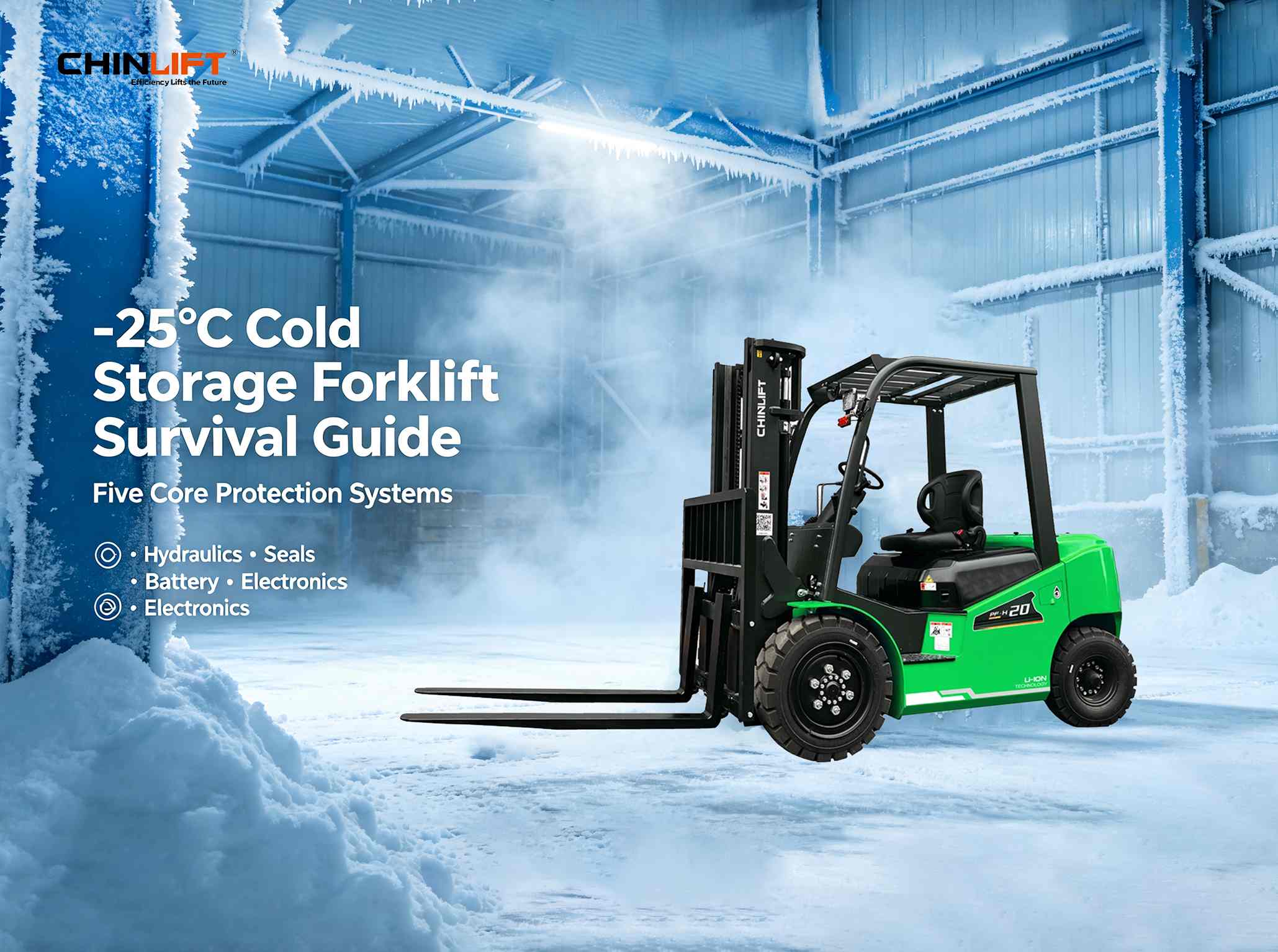
    When cold chain storage enters a deep cold environment of -25℃ or lower, ordinary forklifts not only face the problem of rapid battery depletion, but also encounter multiple challenges such as hydraulic "freezing", sealing cracking, and electrical short circuits. To ensure the equipment's availability in extremely cold conditions, a systematic "anti-freezing" modification of the forklift is necessary. Whether you are operating a 3 Ton Electric Forklift or other load capacities, the fundamental protective principles remain consistent. This article will analyze the complete protection plan for -25℃ cold storage forklifts in four dimensions: hydraulic, sealing, battery, and electrical moisture prevention. Hydraulic System: Fending Off Low Temperature Stagnation In extremely cold environments, a significant increase in hydraulic oil viscosity is the main cause of system failure. It is necessary to select hydraulic oil with specific low-temperature properties, such as Mobil's HVI 26 or Shell's Aero shell 41, to ensure low-temperature fluidity. At the same time, it is recommended to equip hydraulic cylinders with ventilation holes, and the surface of the piston rod should undergo chromium alloy thickening treatment to enhance corrosion resistance. High-pressure hoses must be made of low-temperature resistant rubber material to prevent oil leakage or rupture due to low-temperature hardening. For any electric forklift operating in such harsh conditions, the hydraulic system's reliability directly impacts overall operational safety. Sealing Components and Structure: Preventing Cold Shrinkage Cracking The significant temperature differences caused by the frequent entry and exit of forklifts in and out of the cold storage will accelerate the aging and failure of ordinary seals. The sealing system should adopt a multi-layer composite structure: the base layer uses natural rubber to ensure cold resistance, and the outer layer is composed of polytetrafluoroethylene (PTFE) to provide excellent cold resistance and corrosion protection. For key components such as the lifting chain, ultra-low-temperature-specific materials must be installed to prevent the steel from losing its toughness at low temperatures and thus avoiding the risk of fracture. Leading manufacturers like CHINLIFT Forklift have developed specialized sealing solutions that significantly extend component service life in freezing environments. Battery: Activating Deep Cold Energy The actual capacity of ordinary lithium batteries may drop sharply to less than 80% of the nominal value in an environment of -20℃, and charging becomes difficult. This is particularly critical for a 3 Ton Electric Forklift, which relies entirely on battery power for extended shifts. The solutions can be divided into two steps: First, select a lithium battery pack specifically designed for cold storage with a heating function, and preheat it to the ideal working temperature before operation; second, enhance the sealing and insulation processes of the battery pack, and some leading products can now achieve stable discharge in an ultra-low temperature environment of -55℃. When choosing an electric forklift for cold chain applications, battery thermal management should be a top priority. Electrical Moisture Protection: Overcoming Condensation Water From the -25℃ cold storage to the normal temperature area, the instantaneous formation of condensation (condensate water) on the equipment surface is the "number one killer" of the electrical system. The protection level of the vehicle controller and key electrical components must be raised to **IP67 or above**, and sealing treatment with sealant should be carried out. In addition, all wiring harness connectors need to be lubricated with special waterproof grease, and the display screen should be equipped with an electric heating defogging function to ensure that it will not crash due to short circuit when the humidity changes dramatically. CHINLIFT Forklift has integrated these moisture-proof technologies into their cold storage product lines, ensuring reliable performance in the most demanding environments. Conclusion The protection of the forklift in a -25℃ cold storage is a comprehensive project. Only by integrating low-temperature-resistant oil products, special sealing materials, lithium batteries with preheating function, and high-level electrical moisture-proof design, can the forklift operate stably in the harsh conditions of alternating extreme cold and high humidity. Whether you are evaluating a 3 Ton Electric Forklift or other models, ensuring that your electric forklift comes from a reputable manufacturer like CHINLIFT Forklift with proven cold-storage expertise will provide reliable guarantee for your cold chain logistics operations.
  • Is a heavier counterweight always better for forklifts? A detailed analysis of the drawbacks of excessive counterweighting
    Is a heavier counterweight always better for forklifts? A detailed analysis of the drawbacks of excessive counterweighting
    June 16, 2026
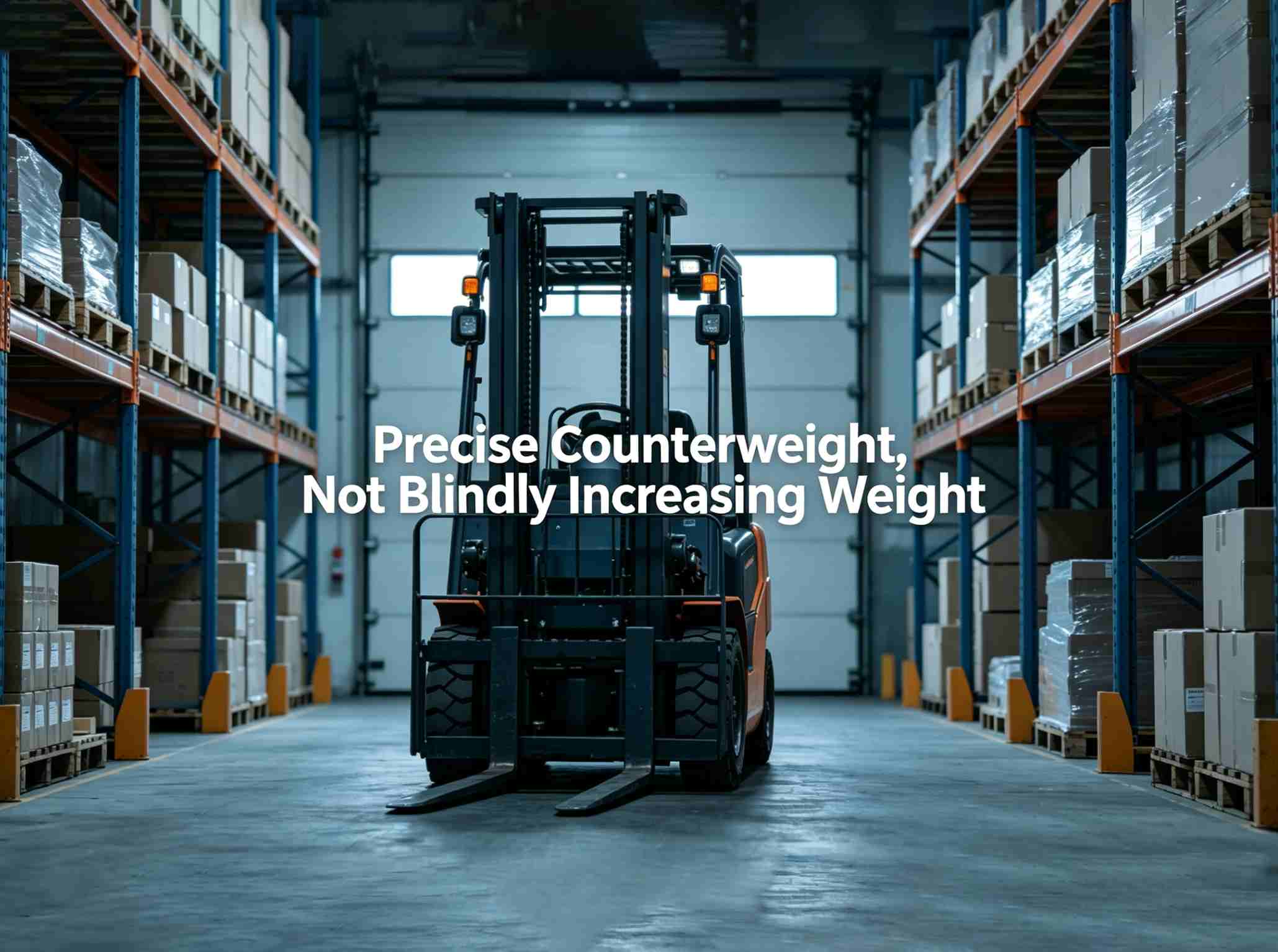
    In the minds of many forklift users, counterweights seem to be "the heavier, the more stable." However, this intuitive assumption significantly deviates from the scientific principles of engineering design. A heavier counterweight is not always better; excessive weight can actually lead to a series of significant and unavoidable problems — a consideration that applies equally to every electric forklift, internal combustion forklift, or any model from brands such as CHINLIFT Forklift. The Basic Function of Counterweights The core function of a forklift counterweight is to balance the load on the forks and prevent the vehicle from tipping forward. According to the principle of leverage, the counterweight must provide sufficient torque to counteract the load torque. However, "sufficient" does not mean "the more, the better." Five Major Drawbacks of Excessive Counterweighting 1. Reduces effective load capacity Counterweights are part of the forklift's own weight. Adding excessive counterweight significantly increases the total vehicle weight. Under the premise of a fixed maximum rated total weight, this actually reduces the weight available for the actual cargo — a counterproductive trade-off. Whether you operate an electric forklift or an internal combustion forklift, this principle remains unchanged. 2. Accelerates wear on critical components Every additional unit of weight increases the load on the drive axle, tires, steering system, and braking system. Accelerated tire wear, longer braking distances, and premature fatigue in the drivetrain — these maintenance costs often add up unexpectedly later on. Even a robust CHINLIFT Forklift is not immune to the accelerated wear caused by excessive counterweighting. 3. Significantly increases energy consumption Whether it's an internal combustion forklift or an electric forklift, a heavier body means higher energy consumption. Fuel consumption rises, battery range decreases — the long-term operating costs are considerable. For an electric forklift, excessive counterweight directly shortens shift life between charges; for an internal combustion forklift, it leads to noticeably higher fuel bills. 4. Reduces maneuverability and flexibility Excessive counterweight reduces the forklift's agility, making operation more difficult in confined spaces such as narrow warehouses, loading docks, and truck tail lifts. Meanwhile, increased ground pressure may damage warehouse floors or loading ramps. A properly designed CHINLIFT Forklift balances counterweight precisely to preserve maneuverability without sacrificing stability. 5. Increases safety hazards Excessive counterweight alters the forklift's center of gravity. During sharp turns or operations on slopes, lateral stability may actually worsen, increasing the risk of tip-overs. Additionally, greater inertia during emergency braking makes handling more difficult. Conclusion Excellent forklift design focuses on "precise counterweighting" rather than "blindly adding weight." Manufacturers such as CHINLIFT Forklift scientifically calculate the optimal counterweight based on parameters such as load curves, mast height, and tire specifications — customizing the balance for each electric forklift and internal combustion forklift model. In actual operation, users should strictly adhere to the rated lifting capacity and never add counterweights on their own to compensate for overloading. Balancing safety and efficiency is the correct approach to forklift operation.

leave a message

leave a message
If you are interested in our products and want to know more details,please leave a message here,we will reply you as soon as we can.
submit

home

products

WhatsApp

Contact

Leave A Message
If you are interested in our products and want to know more details,please leave a message here,we will reply you as soon as we can.
submit