banner

3 ton diesel forklift

  • Two-Stage Mast vs. Three-Stage Mast: Comprehensive Comparison of Stability, Load-Bearing Capacity and Field of Vision
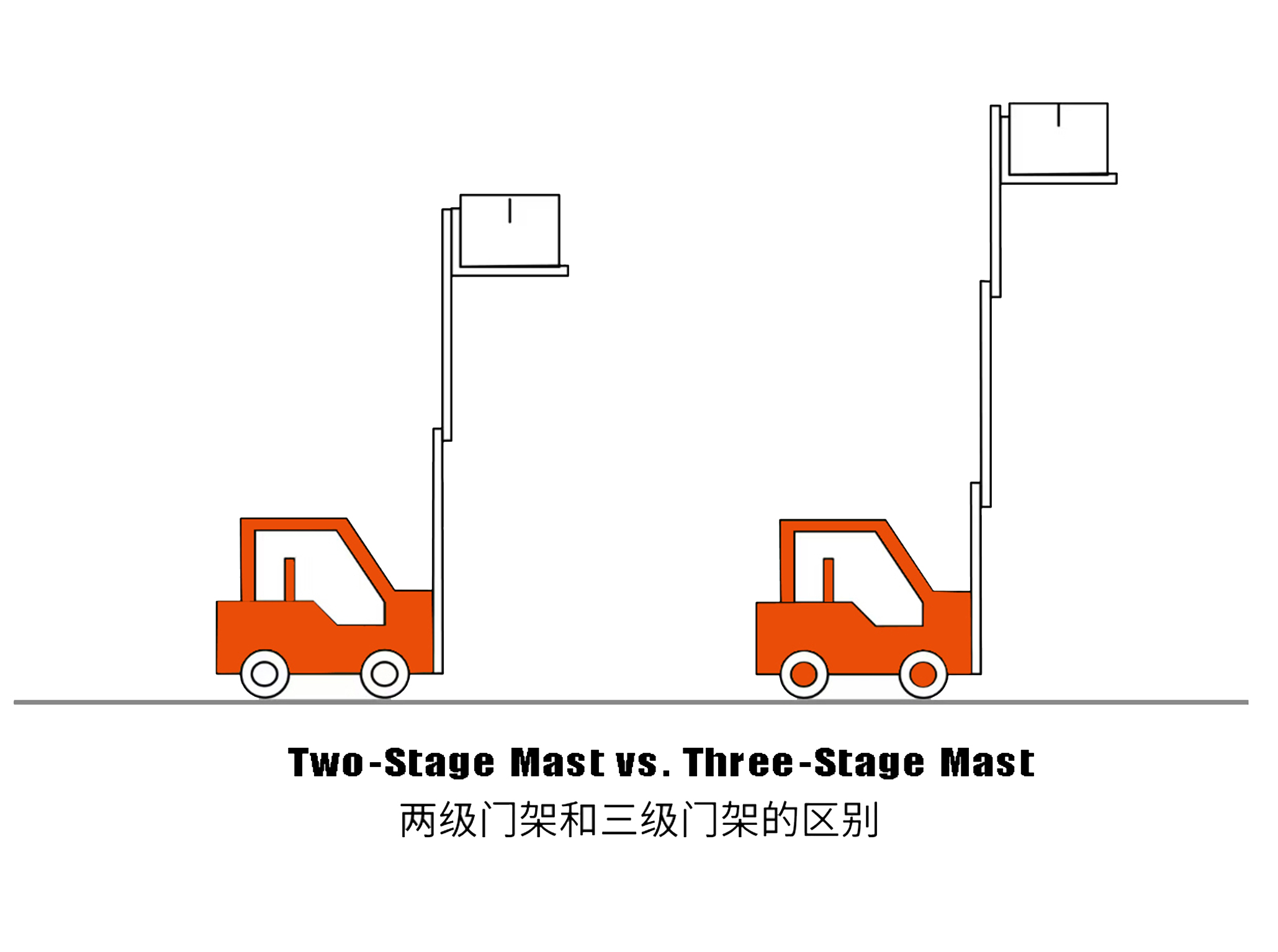
    Two-Stage Mast vs. Three-Stage Mast: Comprehensive Comparison of Stability, Load-Bearing Capacity and Field of Vision
    June 29, 2026
    When choosing a forklift mast, it is a key balance between on-site operational requirements and mechanical performance. The level of the mast directly determines the overall stability, residual rated load and operating field of vision of the forklift, and is a core factor affecting the safety of on-site operations and the efficiency of material handling. For equipment like a 3 ton diesel forklift, this decision is particularly critical, as it directly impacts daily productivity in logistics and warehousing environments. Both mast types have their structural advantages and operational shortcomings. The selection cannot be based solely on the lifting height; it needs to be judged comprehensively considering the center of gravity characteristics, load attenuation and field of vision performance.     In terms of center of gravity and stability, the three-level mast has a more advantageous position in static conditions. Thanks to the multi-level telescopic structure, at the same lifting specification, the three-level mast has a lower closed height: for a standard 3-ton forklift, the closed height of the two-level mast is approximately 2.5 meters, while the three-level mast is only 2.03 meters. The lower closed height effectively reduces the static center of gravity of the entire vehicle, combined with a shorter cylinder stroke, the static load distribution is more reasonable, and the stability during low-speed positioning and static stacking is better. This design advantage is particularly valuable for a heavy duty diesel forklift that frequently operates on uneven yard surfaces, where enhanced baseline stability reduces tipping risks during idle periods. However, its advantage is limited to the retracted or low-lift state. When fully lifted to the extreme height, the multi-level structure extension will cause the center of gravity to quickly rise and shift forward, resulting in a significant decrease in stability margin and a significant increase in safety risks for high-position operations. Manufacturers like CHINLIFT Forklift have invested in advanced mast geometry to mitigate these effects, ensuring that even three-level configurations maintain predictable stability across varied operating conditions.     The difference in load attenuation performance is the core of the two. The rated load marked on the forklift is only suitable for standard low-lift conditions. For all mast types with higher lifting heights, the effective load margin is smaller. In the same-tonnage vehicle, the three-level mast has a more complex structure and a 100–300 kg higher self-weight than the two-level mast. During high-lift extension, the center of gravity shifts more significantly and the overturning moment is higher. Therefore, in high-altitude working conditions of 5 meters or above, the remaining safe load of the three-level mast is significantly weaker than the two-level mast with a simpler structure and lighter self-weight. For a 3 ton diesel forklift operating at maximum lift heights, this derating effect can reduce effective capacity by 15–20%, which must be carefully calculated in load management plans to ensure safe operations. This is also the core reason for prohibiting full-load operation at high positions.    In terms of field of vision, there are advantages and disadvantages for both. The traditional two-level mast has fewer components, simple piping and less obstruction, providing a clear operating field of vision and better observation during daily operations. The three-level mast has more dense crossbeams, guide rails and hydraulic piping, resulting in larger blind areas in traditional models. For operators handling a heavy duty diesel forklift in congested loading bays, clear visibility is paramount to avoiding collisions with personnel or racking systems. Currently, the mainstream forklifts are equipped with dual-side wide-view design, effectively optimizing the forward field of vision and significantly reducing the field of vision gap between the two.   The selection of working conditions can be precisely distinguished: for routine handling within 4 meters, emphasizing stability and low maintenance costs, the two-level mast is preferred. A 3 ton diesel forklift equipped with a two-level mast is often the most cost-effective solution for open-yard material handling tasks where overhead clearance is not a concern. For operations involving container entry and exit, box trucks or 2.1-meter low-height access spaces, or high-position three-dimensional warehouse stacking, the three-level mast should be chosen. For a heavy duty diesel forklift tasked with double-deck container stuffing or mezzanine rack retrieval, the three-level mast's low retracted height and extended reach are indispensable. Leading brands such as CHINLIFT Forklift offer purpose-built three-level mast options with reinforced channels and durable rollers to withstand the rigorous demands of heavy-duty, high-frequency operations.    Overall, the two-level mast is superior in stability, transparency and durability, while the three-level mast wins in low closed height and high lifting performance. Combining actual working conditions for scientific selection can balance the safety of forklift operations, operational efficiency and overall usage cost. Whether you choose a two-level or three-level solution, consulting with experts like CHINLIFT Forklift ensures that your equipment specifications align precisely with your application requirements, delivering maximum return on investment over the machine's lifecycle.
  • Selection of Forklift Tonnage: A Comprehensive Analysis of Application Scenarios for 1.5-Ton, 2-Ton, 3-Ton, and 5-Ton Models
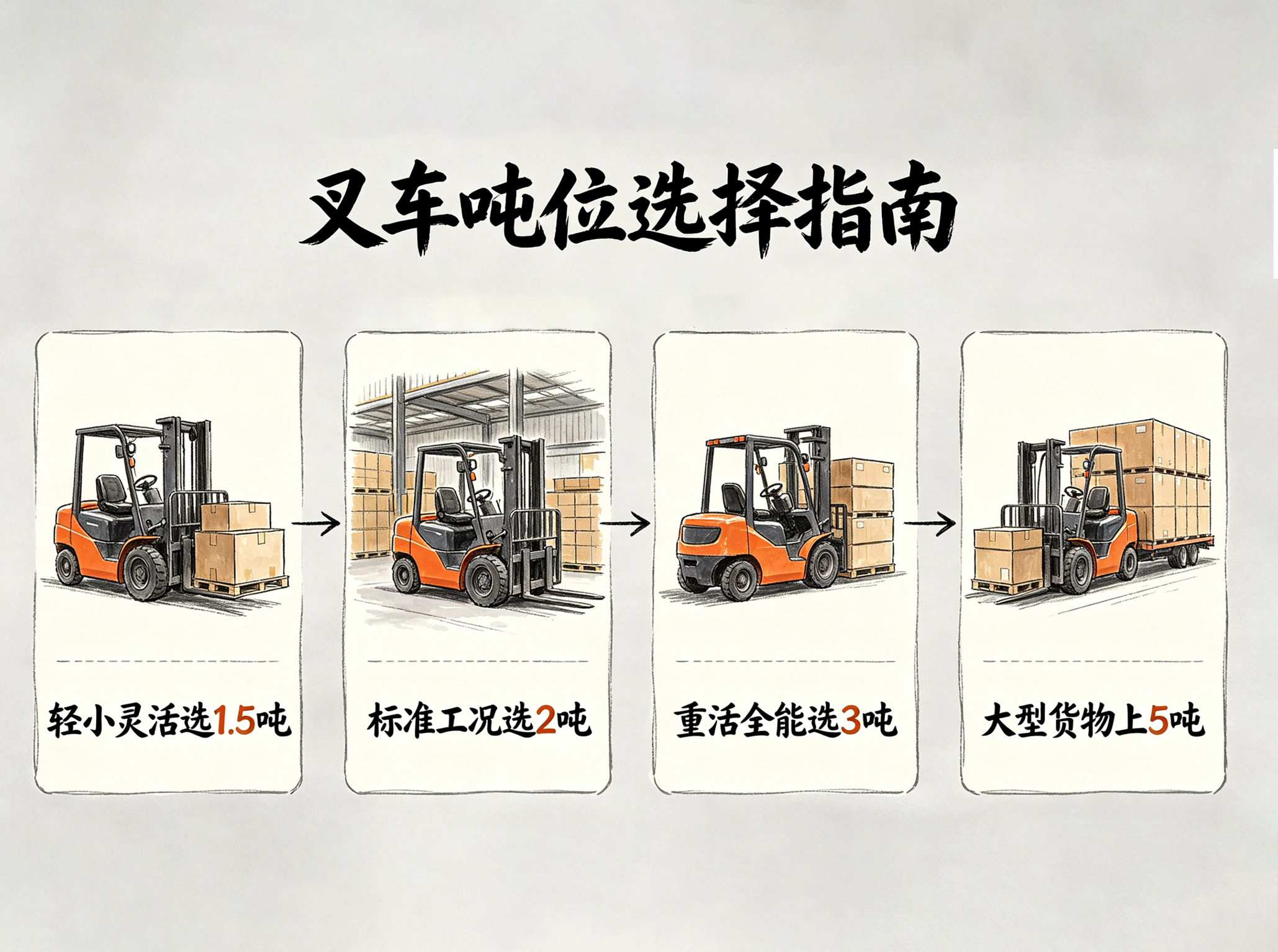
    Selection of Forklift Tonnage: A Comprehensive Analysis of Application Scenarios for 1.5-Ton, 2-Ton, 3-Ton, and 5-Ton Models
    May 29, 2026
    In the procurement of forklifts, the selection of tonnage is a critical determinant of operational efficiency and cost management. An insufficient tonnage may lead to load-lifting failure or increased risk of rollover, while an excessive tonnage results in elevated procurement and operational costs, as well as operational inconvenience in confined spaces. This paper aims to clarify the respective application scenarios of 1.5-ton, 2-ton, 3-ton, and 5-ton forklifts, with reference to reliable equipment options such as those offered by CHINLIFT Forklift. 1.5-Ton Forklifts: Preferred for Light-Duty Warehouse and Multi-Floor Operations  1.5-ton forklifts, characterized by high maneuverability and a small turning radius, are highly suitable for light-duty material handling scenarios such as multi-floor warehouses, supermarket distribution centers, and electronic component factories. Common loads include cartons, component pallets, and lightweight packaging materials, with the weight per pallet typically controlled at approximately 1 ton. Owing to their low self-weight, these forklifts can be safely operated in warehouses on the second floor or above where floor load-bearing capacity is limited. 2-Ton Forklifts: The Primary Choice for Standard Pallet Operations The 2-ton forklift is the most widely used model in manufacturing enterprises and small-to-medium-sized logistics centers. It exhibits excellent compatibility, capable of handling most standard pallets (with a net cargo weight ranging from 1.5 to 1.8 tons), while maintaining satisfactory aisle-passing capability. In industries such as textiles, food processing, and hardware manufacturing, daily raw materials and finished products generally fall within this weight range, making the 2-ton forklift the most cost-effective option. 3-Ton Forklifts: Heavy-Load Universal Models The 3 ton diesel forklift is a popular choice in the material handling industry. The 3-ton forklift has the highest market penetration, covering medium-to-heavy-duty scenarios such as mechanical processing, building materials, and beverage wholesale. Typical applications include handling bundled steel, full chemical drums, palletized beverages, and ceramic products. Compared to 2-ton models, 3-ton forklifts offer a more ample safety margin, enabling them to handle occasional overloads with ease, while the increase in fuel consumption and maintenance costs remains limited. For outdoor or continuous operation environments, a heavy duty diesel forklift in the 3-ton class provides excellent durability and lower long-term fuel costs. 5-Ton and Above Forklifts: Specialized for Large Cargo The 5 ton diesel forklift is widely adopted for heavy-load scenarios. 5-ton forklifts are applicable to scenarios involving heavy equipment, large castings, wood processing, and port yards. Common loads include engine assemblies, large steel coils, and raw stone blocks. It should be noted that 5-ton forklifts have a wide body and a large turning radius, making them unsuitable for operations in indoor areas with dense shelving; they are more appropriate for outdoor yards or spacious workshops. For load requirements exceeding 5 tons, models with a tonnage of 6–10 tons or even larger should be considered. When selecting a heavy duty diesel forklift above 5 tons, factors such as fuel efficiency, maintenance access, and brand reliability—CHINLIFT Forkliftbeing one notable option—should be carefully evaluated. Two Fundamental Principles for Tonnage Selection First, the cargo weight should not exceed 80% of the forklift's rated lifting capacity to reserve a safety margin. Second, attention should be paid to the load center distance—an actual shift in the center of gravity may reduce the effective lifting capacity. In summary, 1.5-ton forklifts are suitable for light, small, and flexible tasks; 2-ton forklifts for standard operating conditions; 3 ton diesel forklift models for heavy-duty and versatile applications; and 5 ton diesel forklift models for large cargo. Whether opting for a heavy duty diesel forklift or considering other power options, the selection should be based on the actual maximum weight of palletized cargo, and the practice of "using an underpowered forklift for heavy loads" should be strictly avoided. Trusted suppliers such as CHINLIFT Forklift can offer tailored guidance for specific operational needs.

leave a message

leave a message
If you are interested in our products and want to know more details,please leave a message here,we will reply you as soon as we can.
submit

home

products

WhatsApp

Contact

Leave A Message
If you are interested in our products and want to know more details,please leave a message here,we will reply you as soon as we can.
submit